Why Customer-facing Technology Lost it's Magic
After a long day on a regular wednesday, I had a plan to cook something for dinner. On the endless journey of watching the food inside the fridge come to a conclusion on who would be eaten, a strong wind started outside. It was one of those days of cloudless sun during the morning, that suddently got shadowed by a massive cloud with gray, night like shade during the afternoon. It was clear that rain would come, but it did not.
While listening to the wissles of the wind, and not deciding what to eat, the lights of the kicthen started to flash. After a quick two or three, darkness then took place. It was around 6pm, and the last sounds of the fridge compressor made it clear that the food there would soon be rot.
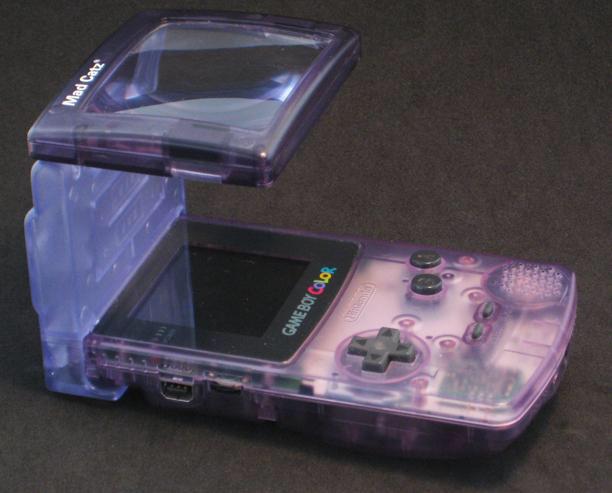
Given that my stove is induction-based, it also lost his soul. I then realized that the time staring at the fresh food would cost me my dinner. Now, with hunger and without power, I've used the rest of the milk and poured myself (evening) morning cereal.
If there's one thing good about power losses, it is that it makes people disconect. It obligates you to do so after you realize that the simpler things don't work without it. With it, after some time spend looking for candles using the led of my phone as a flashlight, one think struck me: Why were tech products in the past so much more engaging? In a power loss on the early 20's, when I was a kid, I'd just drown myself on my gameboy (which had one of those LEDs and magnifiers to play in the dark).
Today... yeah, watever, I had my phone to stare at, and it did not hit that good. But why?
The more we age, more appealing that feeling of "How incredible our relationship in the past with technology was" gets. I remember getting super excited to discover how the flashdrive was also an MP3 player, or to receive a DVD movie as a christmas gift. For some reason, this feeling is not present anymore. Today, consumer electronics has gone too... boring.
You can talk to people that are older too. If you mention something about the early days of consumer tech, I'm pretty sure you're going to take a smille form their face. They also know that this used to hit differently. But why?
What made tech products boring?
It's hard to describe. The feeling of engaging with tech was way more refreshing than today. Companies like Apple, for example, lost their capability to create amazing things. Not only the iphone has been constantly driving iteration under the same characteristics, but all other major successfull products are too. There's no more relevant design changes, and the consumer brain has been studied enough so that marketers know exactly how to trigger your sense of desire. This, of course, have reached a point where this is so embeeded into the mind, that shifts on this behavior will take generations to happen. Most of the creations today are actually improvements to things that were already invented with the addition of companies trying to create trends. Companies does not expose themselves to inovation as they did before simply because they already payed millions on tests to discover what is mostly appeeling for customers to buy.
The consumer tech world has simply gone too boring.
How it was on the early days
Companies back then simply did not have the tools neither the know-how on how to map consumer's brains. They sensed the creation based on what they believed it was important, mainly driven by that company culture (or at least the Leader's) to drive product creation.
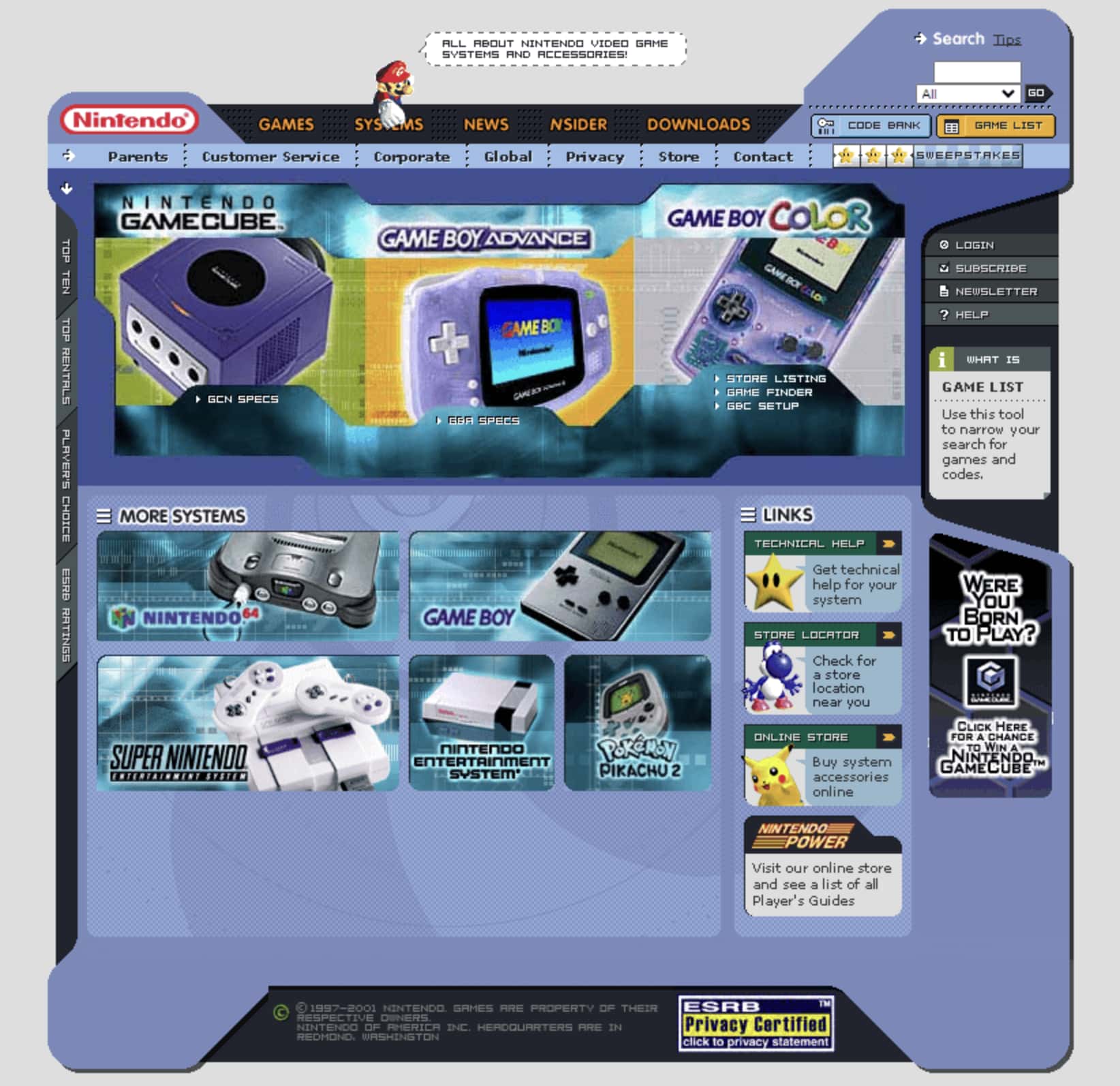
That's why there are feeling in brands. You feel different when you hear about Nintendo or about Sony. There's a clear feeling distiction and that is somehow conected to the fact that their product target people that are shapped culturaly around what they assumed as premisses for their product's design. This was incredibly visible even through their webpages. Take a look at the difference of their webpages by the early 90's.
As the years passed, this gap became sligntly smaller because, in most cases, the consumers are simmilar. Competitive advantage was on the fact that for a specific consumer group (based on culture, lifestyle and overall persona description), the companies started to get obcessed by the penetration they could get through understanding the consumer brain, which ended up converging.
Back untill the early 2000s, comapnies had to embrace the risk of inovation based on their belief of customer pain. Sony, for example, spent countless engineering hours to make a diskreader portable enough to be carried everywehre (in multiples angles) and not end up with a CD with tons of scratches (as the diskman was).
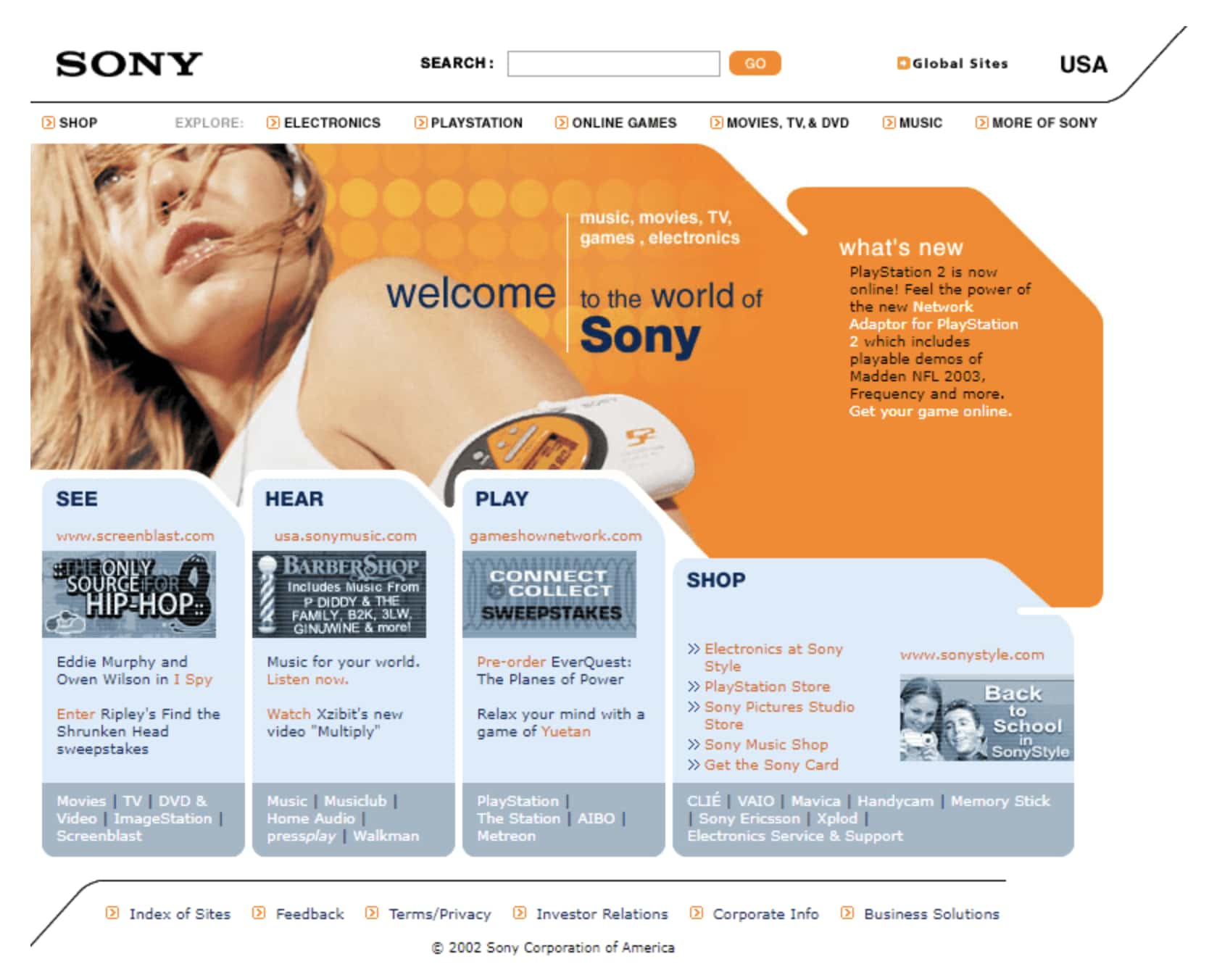
This made Sony advance towards products to a more mature audience, even when the playstation was released. You can tell that this was the decision given the complexity and rating of the most sold playstation games. The most popular franchises on the PlayStation include Crash Bandicoot (27.43 million combined units), Final Fantasy (26.39 million combined units), Tomb Raider (25.9 million combined units), Gran Turismo (20.22 million combined units), and Tekken (15.73 million combined units)[1]
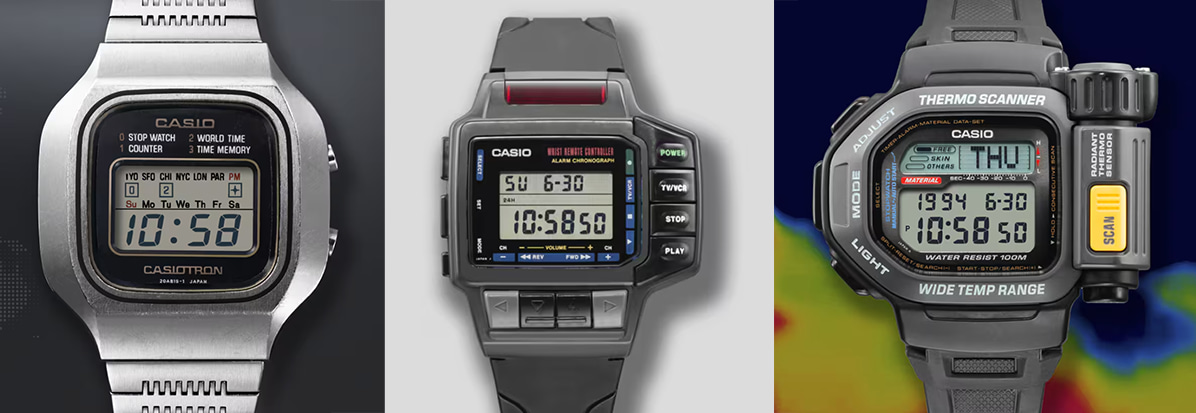
On antoher completely different industry, CASIO was testing and creating watches that had an incredible range of features: Wristwatches with embedded calculators to ones with infrared technology to act as a TV remote[2].
This level of company commitment with inovation simply does not exist enymore.
Games, on the other hand, used this period to thrive with new genres and the use of multiplayer to create incredible experiences. Games such as Quake III Arena, Counter Strike, Age of Empires and others used the underlying layer of the recent World Wide Web to leverage another level of interactions
Last, but definitly not least, the world around mobile phones was thriving when completly different models started to call the attention of the most diverse base of users. We had Palm, Nokia and Motorolla creating colorfull and experimental products that consumers wanted to have not becasue the almost bionic connectivity that we need today, but for other amazing features such as portable agendas, in-device writing and also the pocket-size capabilities of these new phones.
Will this ever go back?
I trully believe it will. Not the way we'd love too (guys that still write plain HTML websites), but with customers starting to get bored of the same things everytime. Lack of inovation aligned with shallow design decisions is something I can get bored by. I'm curious to see wether the next generation will be cringe enough to demand new, inovative products, or will end up wanting the next gen iphone with just som more x megapixels.
references